Fibreglass vs carbon fibre body kits: which should you buy?
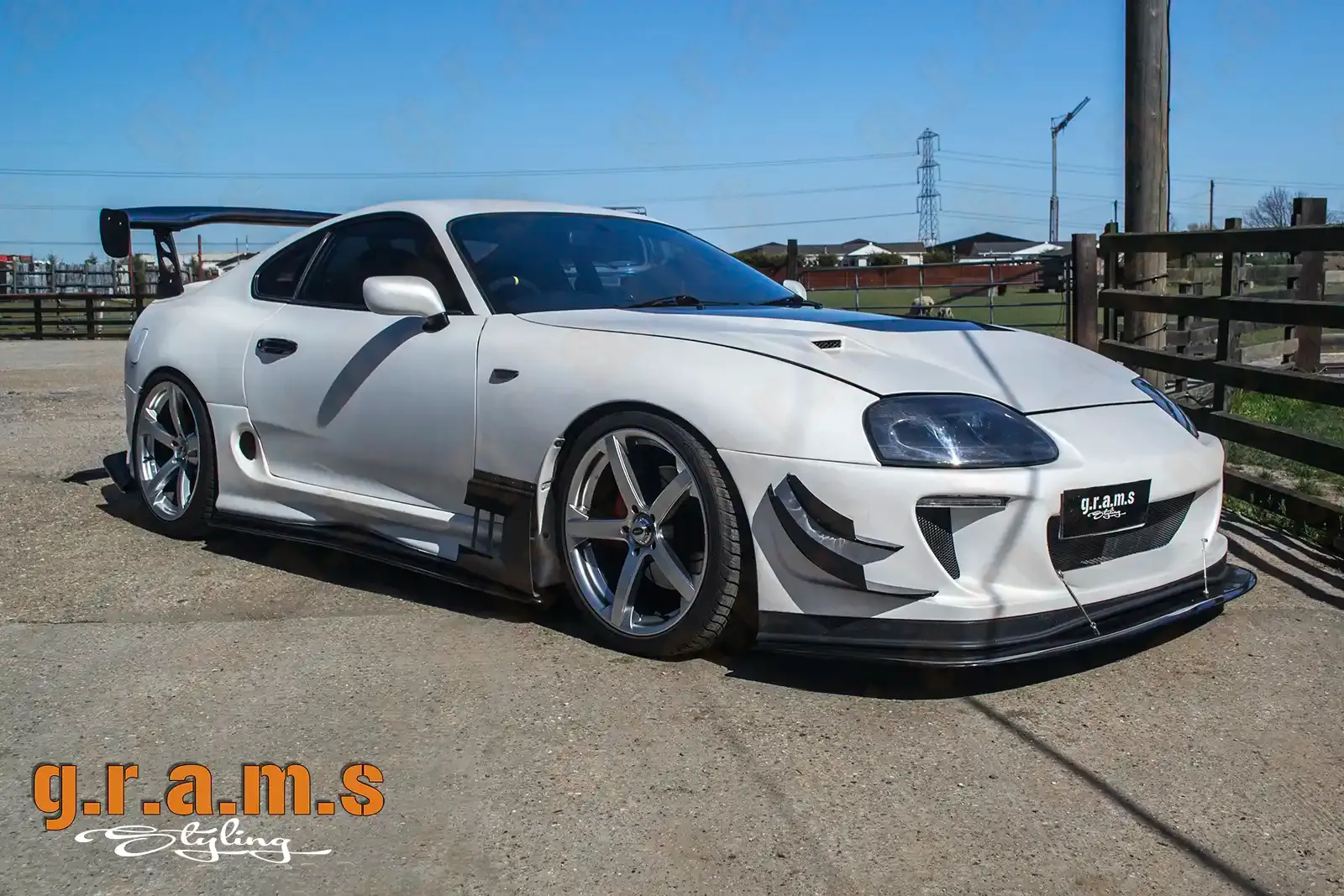
Almost every part we sell comes in two versions: hand laid fibreglass and carbon fibre. Both come out of the same mould, taken off a real car of that generation. So the question we hear most often is not "will it fit?" but "which one should I buy?"
This guide compares the four materials you will meet when shopping for a body kit, then gives you our honest answer.
The four materials at a glance
| Fibreglass (FRP) | Carbon fibre | ABS plastic | Polyurethane (PU) | |
|---|---|---|---|---|
| How it is made | Glass cloth and resin laid by hand into a mould | Carbon cloth and epoxy resin, infused, wet laid or prepreg | Plastic sheet heated and vacuum formed | Liquid plastic injected or cast into a mould |
| Stiffness | Stiff | Stiffest | Flexible | Very flexible |
| Weight | Light | Lightest | Light | Heavy |
| When it breaks | Cracks, repairable | Cracks, repairable but harder to hide | Splits or deforms | Bends back, tears when it finally goes |
| Finish | Gelcoat, needs paint for a show finish | Clear coated weave, or paint | Usually black, often textured | Primer, needs paint |
| Typical use | Street, drift, track | Show, track, weight saving | Cheap lips and splitters | OEM bumpers |
Fibreglass: the workhorse
Fibreglass (glass fibre reinforced plastic, FRP) is glass cloth soaked in resin and laid up by hand inside a mould. Our fibreglass parts are laid by hand and cured at high temperature, which makes the laminate stronger. They come out of the mould with a black or white gelcoat, a hard resin skin that you can run as it is or prepare for paint.
Why people choose it:
- Price. On our own range, fibreglass costs about half as much as carbon for the same part.
- Repairability. A cracked fibreglass part can be repaired with a resin and glass mat kit, sanded and painted. Any body shop knows how to do it. That is why drift cars run fibreglass: parts meet kerbs and tyre walls, and you fix them between rounds.
- Paint. Gelcoat takes primer and paint well once it is keyed. If you are painting the part to match the car anyway, carbon brings no visual benefit.
What to expect: fibreglass needs preparation before paint. The painter sands the parting lines, fills any pinholes, then primes and block sands the part before the colour goes on. Do not rely on a solvent wipe alone. For a full kit, plan for a body shop to fit and paint it.
Carbon fibre: light, stiff and on show
Carbon fibre is woven carbon cloth set in epoxy resin. Our carbon fibre parts are epoxy infused under vacuum: the dry cloth is laid in the mould, sealed under a bag, and resin is drawn through it by vacuum. That gives a lighter, more consistent laminate than brushing resin on by hand.
Why people choose it:
- Weight. Carbon is the lightest option for the same part. How much lighter depends on the part and its lay-up, so we do not quote a blanket percentage.
- Stiffness. A carbon splitter or wing blade flexes less under load than the same part in fibreglass.
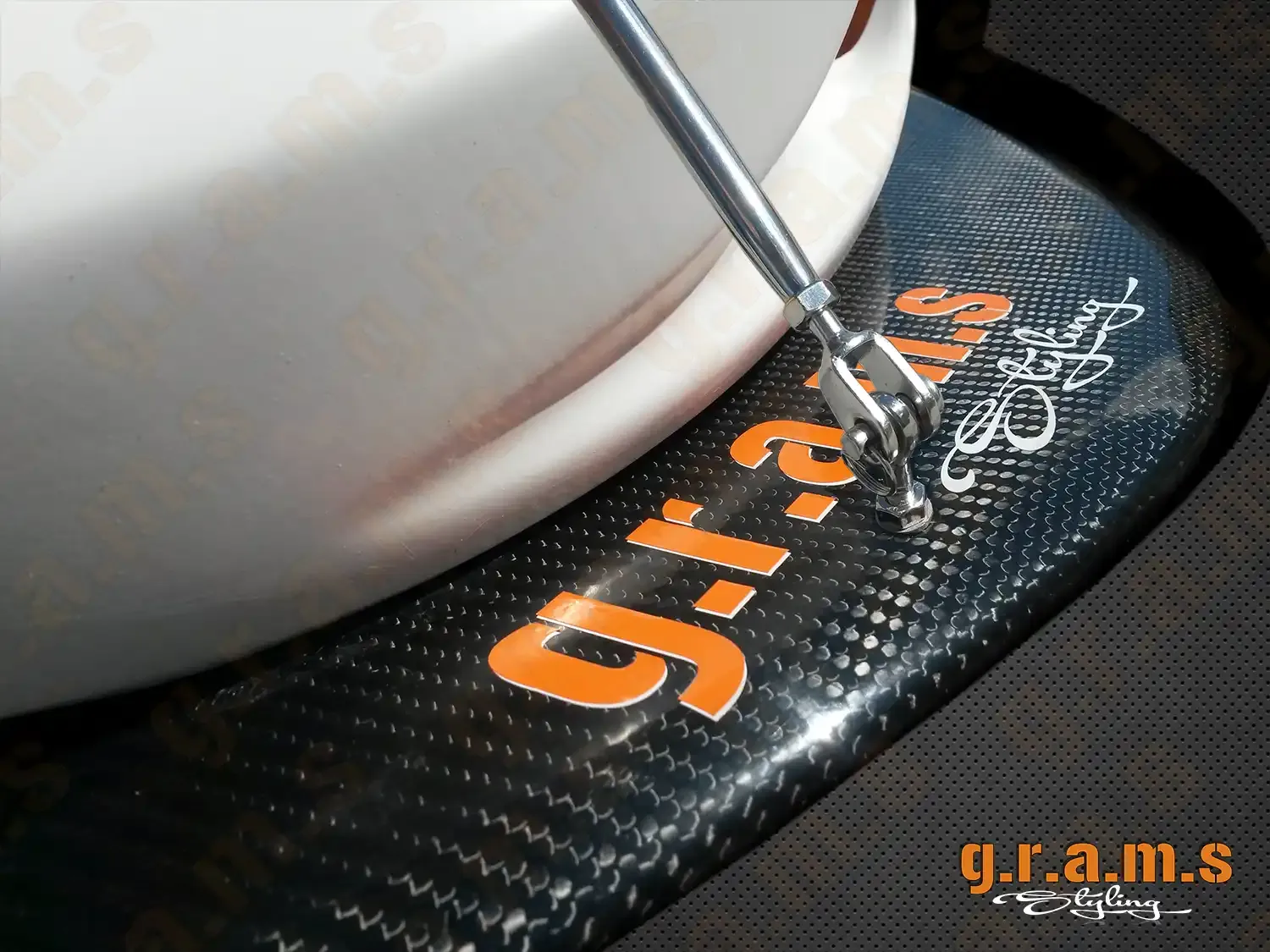
- Looks. A clear coated carbon weave is a finish in itself. We offer a gloss weave, a dry matte finish, and coloured carbon (carbon-kevlar) on many parts.
What to expect: carbon costs more and takes longer to make. Across our range, carbon parts take longer to dispatch than fibreglass. A cracked carbon part can be repaired structurally, but a repair is hard to hide under a clear coat, so it usually ends up painted.
There is also a middle option on some parts: carbon for paint spraying. It is 100% carbon with cosmetic flaws in the weave, sold for parts that will be painted or wrapped. You get the weight and stiffness of carbon without paying for a perfect weave you will never see.
ABS and polyurethane: what you get for less
You will see cheaper kits in two plastics:
- ABS parts are made by heating a plastic sheet and forming it over a tool. It is the material of many mass-market lips and splitters. ABS bends rather than cracks, which is nice over speed bumps, but it is too flexible for a splitter that is meant to carry aero load, and thin sections can sag in summer heat.
- Polyurethane is what many factory bumpers are made of. It survives knocks very well because it flexes back. It is heavy, and when it finally tears it is hard to repair invisibly.
Neither is wrong for a car that only needs a styling lip. For a part that carries load, such as a splitter, a wing or a diffuser, or for an exact fit to a car generation, a laminated part made in a mould is the better choice.
What does each material really cost?
We sell 363 parts in both fibreglass and carbon. Comparing the cheapest fibreglass option with the cheapest carbon option of each part:
- the median carbon part costs 2.0 times its fibreglass version;
- the middle half of our range sits between 1.75 and 2.4 times.
Remember the hidden costs too. A fibreglass part you paint costs the part plus prep and paint. A clear coated carbon part costs more up front, but it is finished when it arrives.
Our honest recommendation
- Daily driver you will paint to match: fibreglass. You get the same shape for about half the price, and you pay the painter either way.
- Drift or club track car: fibreglass for anything that will hit things (bumpers, skirts, spats), carbon for parts that carry load (splitter blades, wings).
- Show car or a build where weight matters: carbon, in gloss or dry matte.
- Painted, but you want the weight saving: carbon for paint spraying.
If you are not sure, send us your car and what you use it for. We will tell you which version makes sense, even if it is the cheaper one.
For the different kinds of carbon (dry, wet, prepreg and forged), read dry carbon vs wet carbon, explained.
FAQ
Is carbon fibre stronger than fibreglass?
Carbon is stiffer and lighter for the same thickness, so it flexes less under load. Fibreglass is more forgiving in a knock and easier to repair, which is why many drift and street cars run it.
How much more does a carbon fibre body kit cost than fibreglass?
On our own range of 363 parts made in both materials, the carbon version costs about twice the fibreglass version (median 2.0 times, with most parts between 1.75 and 2.4 times).
Can fibreglass body parts be repaired?
Yes. Cracks are repaired with resin and glass mat from the back, then filled, sanded and painted from the front. Any body shop can do it.
Do fibreglass parts come painted?
No. Our fibreglass parts come in a black or white gelcoat. You can run them as they are or have them prepared and painted. We do not offer a paint service.
Is a polyurethane bumper better than fibreglass?
Polyurethane survives knocks better because it flexes, but it is heavier and hard to repair invisibly. Fibreglass is lighter, stiffer and easy to repair, and it holds a sharper shape.
More from the blog
Dry carbon vs wet carbon vs forged carbon, explained by a maker
Dry carbon, wet carbon, prepreg, vacuum infusion and forged carbon: what each process really is, why matte does not mean dry, and how to tell what you are buying.
Best body kit brands in Europe (2026): who makes what, where, and for which cars
GRAMS Styling, Maxton, Prior Design, Rieger, TECHART, BRABUS and Mansory compared on where parts are made, material, cars and price. By a maker.

Made in Europe body kits: how to tell a manufacturer from an importer
A European brand name is not a European workshop. Six checks that show where a body kit is really made, and why it changes fit, delivery and customs.