Made in Europe body kits: how to tell a manufacturer from an importer

"European brand" is a description of a company. "Made in Europe" is a description of a part. The two are mixed up on purpose in a lot of listings, and the difference shows up later: in the gap between the splitter and the bumper, in a six week delivery that was promised as five days, in a customs invoice, and in the silence when you ask for help.
We run two workshops, in the UK and in Lithuania, and we compete with importers every day. This is the checklist we would use as a buyer.
Why it matters
- Fit. A part made from a mould taken off the actual car, by the people who sell it, can be corrected when a batch is off. A part ordered by the container from a catalogue cannot.
- Lead time and stock. Importers hold stock of the popular sizes and run out of the rest. Makers quote a lead time and deliver anything in the range.
- Customs and VAT. Parts made in the EU and sold to the EU carry no import duty. Parts made in the UK and sold to the UK, the same. Parts made in Asia carry duty wherever they land, which is paid by you or hidden in the price.
- Help. When a part does not fit, a maker can look at the mould. An importer can offer a refund and a return label, at best.
Six checks
1. Is the country of manufacture stated, not implied?
"Designed in Germany", "European quality", "EU company" and a flag in the logo are not statements of manufacture. Look for a sentence such as "made in our workshop in Lithuania" or "produced in Poland". If the site never says where the parts are made, assume they are not made there.
2. Are there photos of moulds, layup and curing?
Any maker has them, and most are proud of them: raw fibreglass in a mould, a carbon part under vacuum, an oven, a trimming bench. A site with only rendered studio shots of finished parts on cars is showing a catalogue, not a workshop.
3. Can you choose the material and the finish for the same shape?
A manufacturer can lay the same mould up in fiberglass or carbon, offer gelcoat for paint, gloss or matte carbon, forged carbon, Carbon-Kevlar. An importer sells what is in the container. A long finish list for one part is a strong sign of in-house production.
4. Is it made to order, with a lead time?
"Ships in 24 hours" across a range of hundreds of parts for cars from 1995 to 2025 means a warehouse full of imported stock. "Made to order, 2 to 4 weeks" means someone is going to lay up your part. The second is slower and it is the honest one.
5. Where does the part physically ship from?
Ask before you pay. A European company drop-shipping from Asia will tell you if asked directly, and the tracking number tells you anyway. Our EU orders ship from Lithuania and UK and worldwide orders from Upminster, England, and we say so on every product page.
6. What exactly is the fit guarantee?
Everyone promises fitment. Read what happens when it fails. A maker can remake or adjust; that is what our Perfect Fit Guaranteed promise is. An importer's guarantee is a return policy with another name.
The big European brands, checked against this list
To be fair to the market: the established names mostly pass. Maxton Design states production in Poland. Rieger designs and thermoforms in Bavaria. Prior Design, TECHART, BRABUS and Mansory state German production. The relabelling problem lives below them, in marketplace listings and in brands that exist only as a logo and a Shopify theme. Our comparison of the European brands says what each is good at.
How GRAMS Styling answers the six checks
- Made in our own workshops in the UK (Upminster) and Lithuania. It is on the about page, on this blog and in the structured data of every product page.
- The customer cars gallery shows the parts fitted; workshop photos are on our Instagram and we send more on request.
- Every shape comes in fiberglass or carbon fibre, with gelcoat, gloss, matte, dry carbon, forged carbon and Carbon-Kevlar options.
- Made to order; ask us for the current lead time before you pay, we answer with a date.
- EU orders ship from Lithuania, everything else from England. No customs for EU or UK customers.
- Perfect Fit Guaranteed: a part made for your generation that does not fit is our problem.
Use the same six questions on us and on anyone else. A maker will enjoy answering them.
FAQ
How do I know if a body kit is really made in Europe?
Look for a plain statement of the country of manufacture, workshop photos of moulds and layup, a choice of materials and finishes for the same part, a made-to-order lead time, and a clear answer to where the part ships from. Brands that only say "European quality" or "EU company" are usually importing.
Do I pay customs on a body kit made in the EU?
Not if you are in the EU: parts made in Lithuania and shipped from Lithuania to an EU address carry no import duty. UK customers receive parts made and shipped from our UK workshop, also without customs. Parts made in Asia carry duty wherever they land.
Where are GRAMS Styling parts made?
In our own two workshops: Upminster in England for the UK and the rest of the world, and Lithuania for EU orders. Fiberglass parts are hand laid and cured at high temperature, carbon fibre parts are epoxy infused under vacuum.
Why does a made-to-order part take longer than a stocked one?
Because it is made after you order it: layup, curing, trimming and finishing take days, not minutes. In return you get the exact shape, material and finish you chose, for a car generation that no warehouse would stock.
More from the blog
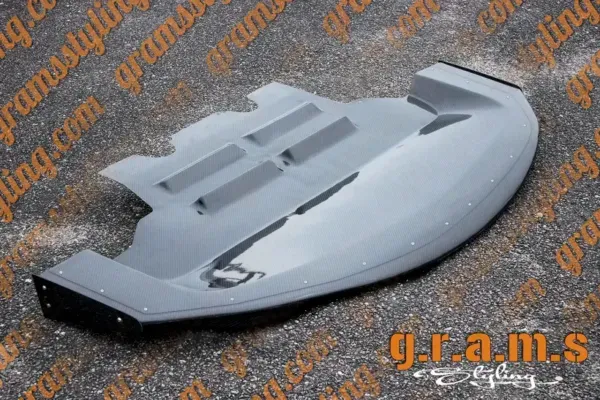
Best body kit brands in Europe (2026): who makes what, where, and for which cars
GRAMS Styling, Maxton, Prior Design, Rieger, TECHART, BRABUS and Mansory compared on where parts are made, material, cars and price. By a maker.
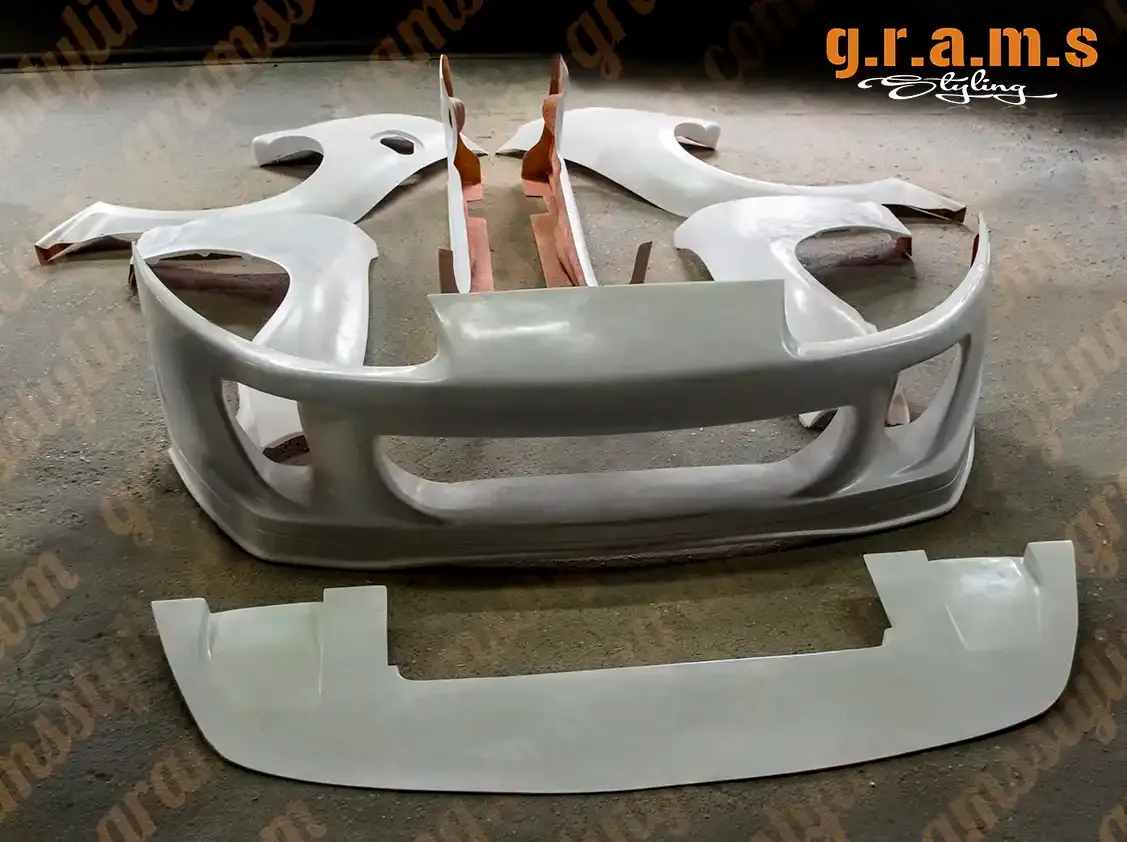
Toyota Supra MK4 body kit guide: Ridox, Bomex, Top Secret and TRD styles explained
A buyer's guide to Supra MK4 (JZA80) aero: what Ridox, Bomex, Top Secret, TRD and Do-Luck style parts look like, basic vs wide body, diffusers and spats, originals vs replicas, and what to check before you order.
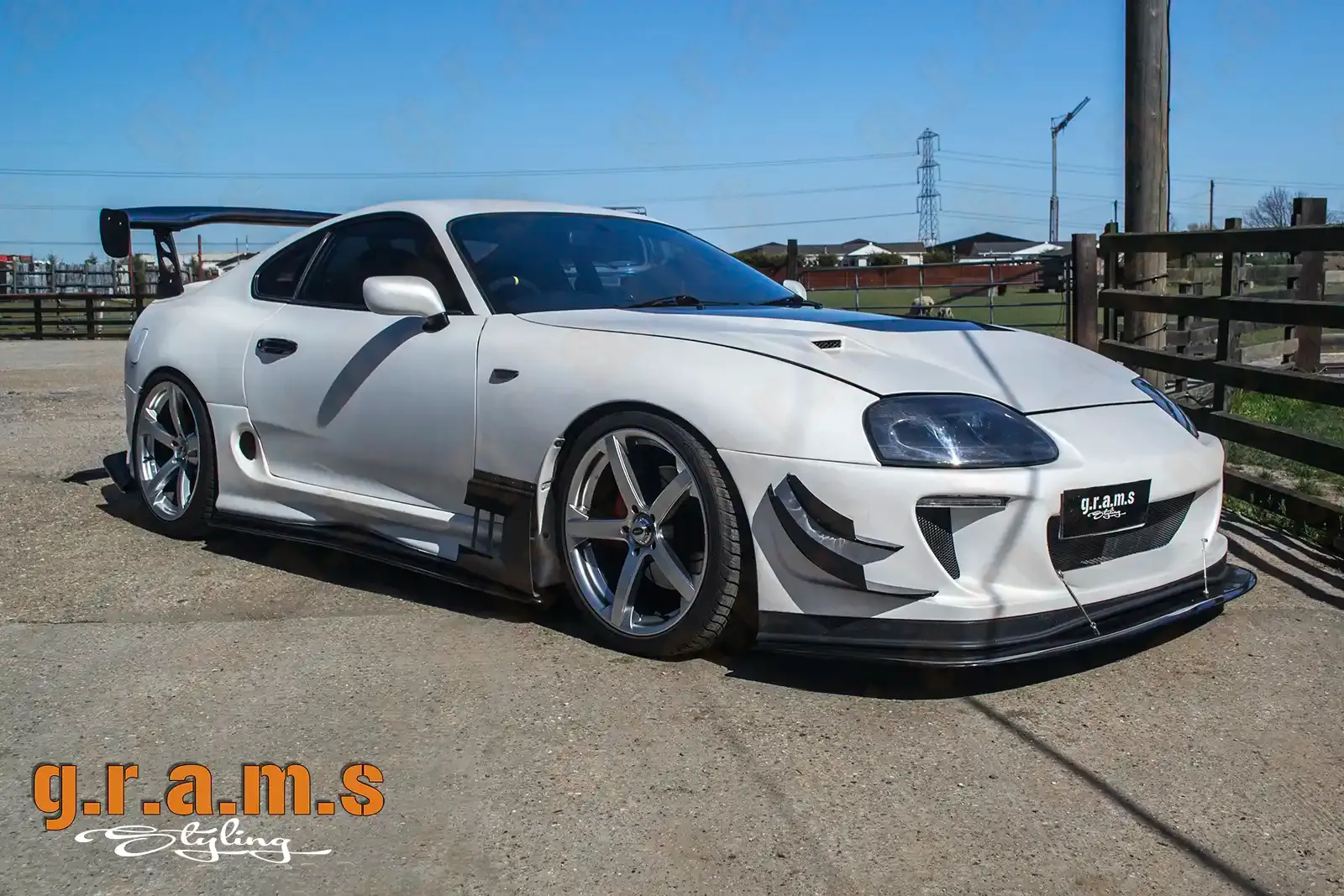
Fibreglass vs carbon fibre body kits: which should you buy?
Fibreglass, carbon fibre, ABS or polyurethane: how each body kit material is made, what it costs, how it breaks and how it repairs. Real numbers from 363 parts we make in both materials.