Dry carbon vs wet carbon vs forged carbon, explained by a maker
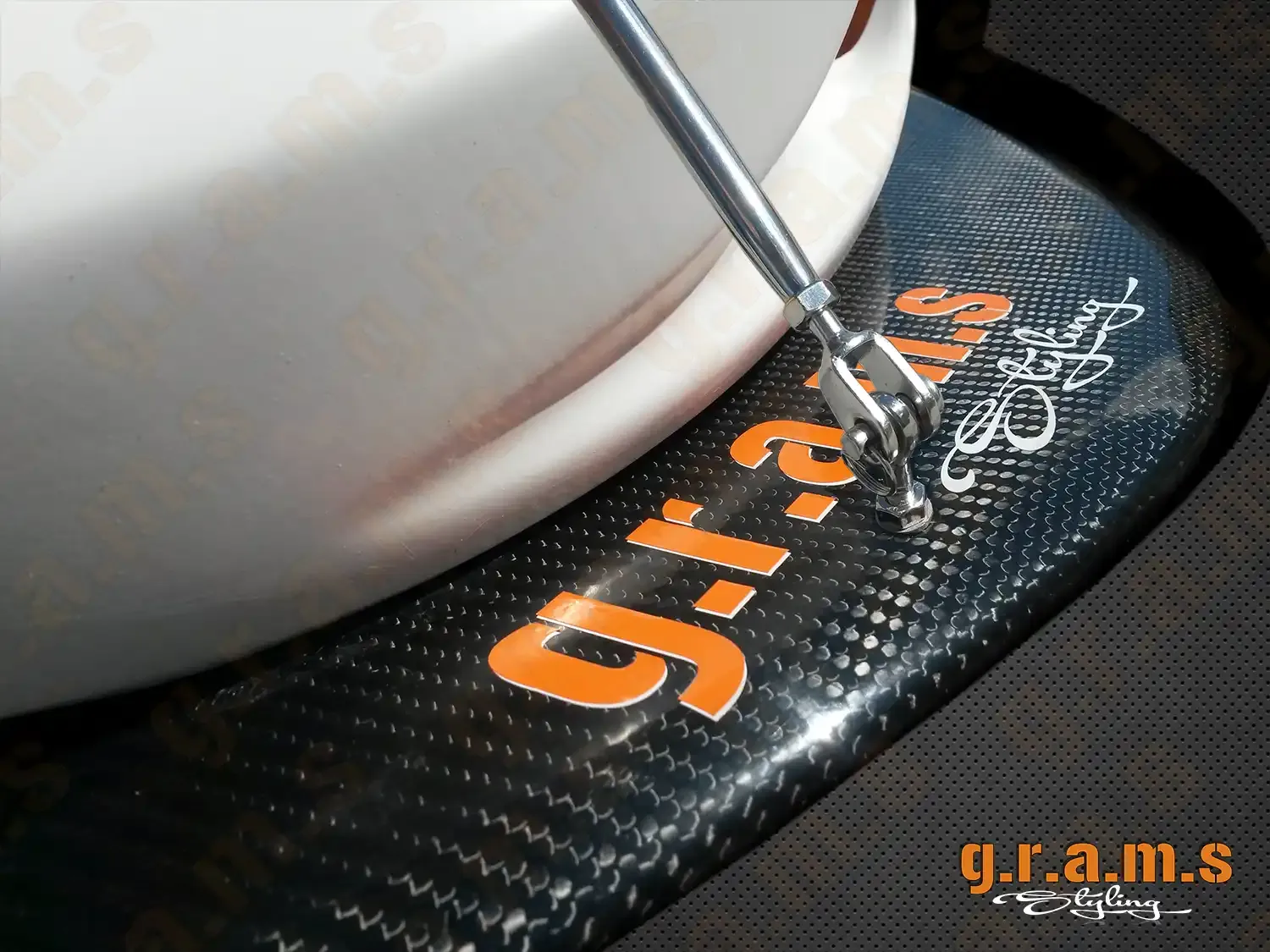
"Dry carbon" and "wet carbon" are two of the most confusing terms in car parts. Sellers use them for a process, for a finish and sometimes simply for a price level. As a workshop that lays up carbon parts every week, here is what the words actually mean, and the one process most guides leave out.
The short version
- Dry and wet describe how the resin gets into the carbon cloth. They do not describe whether the part looks matte or glossy.
- There are three main processes, not two: wet lay-up, vacuum infusion and prepreg.
- Forged carbon is a different material again: chopped fibres pressed in a mould, not a woven cloth.
Wet lay-up: resin brushed on by hand
In a wet lay-up, the carbon cloth is laid in the mould and the resin is brushed or rolled into it by hand. It needs little equipment, so many low-cost parts are made this way.
The drawback is control. The amount of resin depends on the person with the brush, and parts tend to carry more resin than they need. Extra resin adds weight but no strength. Some cheap "carbon" parts are also a single carbon layer over a thick fibreglass backing. They look like carbon from the front, but they weigh and behave like fibreglass.
Vacuum infusion: what we use for our carbon parts
In vacuum infusion, the dry carbon cloth goes into the mould first. The whole stack is sealed under a vacuum bag, and the vacuum then draws epoxy resin through the cloth until it is fully wet out.
Because the vacuum controls the flow, the resin content is lower and far more even than in a hand lay-up. The laminate is compacted while it cures, so the part comes out lighter and stiffer. Infusion does not need an autoclave, which keeps the cost reasonable. That is why our carbon parts, such as the Supra MK4 side diverters, are epoxy infused under vacuum.
Many guides jump straight from "wet" to "dry" and skip infusion. That is a pity, because for most car parts infusion gets close to prepreg weight and stiffness at a fraction of the cost.
Prepreg: what "dry carbon" originally meant
Prepreg cloth comes from the supplier already impregnated with a measured amount of resin. It is laid in the mould, bagged and cured under heat and pressure, usually in an autoclave (a heated pressure vessel). Some makers quote around 120 °C at several bar.
This is the process behind true "dry carbon". It gives the lowest resin content, the best consistency and the lightest parts. It is also the most expensive: the cloth must be stored frozen, the moulds must survive the heat, and an autoclave is a big investment. Prepreg makes sense for motorsport parts where every gram counts and price matters less.
Forged carbon: chopped fibre in a press
Forged carbon is made from short chopped carbon fibres mixed with resin and pressed in a heated mould. The fibres point in every direction, which gives the marbled look.
It is great for complex shapes such as mirror caps, trim and small brackets, because the chopped fibre flows into corners a woven cloth cannot follow. For a large flat panel, a woven lay-up is usually lighter for the same stiffness. Choose forged carbon for the look, not as an upgrade over woven carbon.
Matte is a finish, not a process
This is where most of the confusion comes from. Many sellers now call any matte carbon part "dry carbon". The matte or gloss look comes from the final clear coat, not from how the laminate was made:
- A gloss part has a glossy clear coat over the weave.
- A matte part has a matte clear coat over the same weave.
On our site, "dry carbon matte" is the matte finish of our infused carbon laminate. We name it that way because it is how buyers search for it. It is not an autoclave prepreg part, and we would rather tell you that here than let you guess.
Whatever the finish, carbon needs a UV-stable clear coat outdoors. Epoxy resin left bare in sunlight yellows and turns chalky over time.
How to tell what you are buying
- Ask the maker which process they use. A real manufacturer will tell you. A reseller often cannot.
- Look at the back of the part. A thick white or green layer behind a single carbon skin means a fibreglass backing.
- Ask for the weight of the part itself, not the parcel weight.
- Be wary of numbers without a source. Claims like "60% lighter" depend completely on the part and the lay-up being compared.
Which one should you buy?
| Process | Weight | Consistency | Cost | Best for |
|---|---|---|---|---|
| Wet lay-up | Heaviest carbon | Variable | Lowest | Cosmetic parts on a budget |
| Vacuum infusion | Light | Good | Medium | Street and track aero, most body kits |
| Prepreg (autoclave) | Lightest | Best | Highest | Motorsport, weight-critical parts |
| Forged | Depends on part | Good | Medium to high | Small complex shapes, the look |
For splitters, wings, diffusers and body parts on a road or track car, vacuum infusion is the sweet spot. If you are painting the part anyway, consider fibreglass instead: we compare both in fibreglass vs carbon fibre body kits.
FAQ
What is the difference between dry carbon and wet carbon?
Wet carbon has its resin brushed into the cloth by hand. Dry carbon originally means prepreg: cloth supplied with a measured amount of resin and cured under heat and pressure. Dry carbon is lighter and more consistent, and it costs more.
Is matte carbon the same as dry carbon?
No. Matte and gloss describe the clear coat on top. Many sellers call matte parts "dry carbon", but the finish tells you nothing about how the laminate was made.
Is forged carbon stronger than regular carbon fibre?
Not for large panels. Forged carbon uses chopped fibres pointing in every direction. It suits small complex shapes, but a woven lay-up is usually lighter for the same stiffness on a flat part.
What is vacuum infusion?
Dry carbon cloth is sealed in the mould under a vacuum bag, and the vacuum draws resin through it. It gives a lighter, more even laminate than a hand lay-up without the cost of an autoclave.
How are GRAMS Styling carbon parts made?
Our carbon parts are epoxy infused under vacuum, in the same moulds as our fibreglass parts. They come in a gloss weave, a dry matte finish or coloured carbon.
More from the blog

Fibreglass vs carbon fibre body kits: which should you buy?
Fibreglass, carbon fibre, ABS or polyurethane: how each body kit material is made, what it costs, how it breaks and how it repairs. Real numbers from 363 parts we make in both materials.
Best body kit brands in Europe (2026): who makes what, where, and for which cars
GRAMS Styling, Maxton, Prior Design, Rieger, TECHART, BRABUS and Mansory compared on where parts are made, material, cars and price. By a maker.

Made in Europe body kits: how to tell a manufacturer from an importer
A European brand name is not a European workshop. Six checks that show where a body kit is really made, and why it changes fit, delivery and customs.