Need for Speed Underground cars: the body kits that defined 2000s tuning
Need for Speed: Underground (November 2003) and Underground 2 (November 2004) put bolt-on body kits in front of millions of players. The cars people remember are mostly Japanese: the Nissan Skyline GT-R R34 on the first game's cover, the Nissan 350Z on the second's, and the Toyota Supra, Nissan 240SX and Subaru Impreza close behind. Here is what the games let you change, the cars that defined them, and what those parts look like on real cars today.
Two games, one year apart
EA Black Box released Underground in North America on 17 November 2003 and in Europe on 21 November, with the European PC version on 28 November. It came out two years after The Fast and the Furious, and in its 20th anniversary piece The Drive wrote that the game "seized the newfound mainstream fervor around tuner culture and street racing" that followed the film. It sold strongly in Britain: 700,000 copies in the UK by January 2004, and more than 7 million worldwide by mid-2004, according to EA.
Underground 2 followed on 15 November 2004 in North America and 19 November in Europe. It swapped Olympic City, which had no free roam, for Bayview, an open city you drove around between events. EA reported more than 8.4 million sales by the end of 2004.
What the garage let you change
In the first game you could change the front and rear bumpers, side skirts, spoiler, bonnet, roof scoop, exhaust tips, paint, vinyls and underglow neon, and fit wide body kits. EA licensed parts from 52 aftermarket manufacturers, GReddy and HKS among them. The body parts themselves carried invented names, such as Renegade side skirts or Switchblade spoilers, and more of them unlocked as you worked through the race events.
Underground 2 went further: doors, headlights and tail lights, mirrors, spinners, car audio in the boot, hydraulics and nitrous bottles. Every visual upgrade raised a car's visual rating, up to 10.0, and you needed one car at 10.0 to unlock all the DVD cover events. Spoilers and bonnets were not only for show either. In Underground 2 they changed how much downforce you could tune into the car.
The shapes were made up, but the ideas were real: a deeper front bumper, skirts that lower the side line, a wing on tall uprights and arches wide enough for a wider track. Those are the same parts we make today.
The cars that defined Underground
Nissan Skyline GT-R R34
The first game's cover car is Eddie's Skyline GT-R (BNR34). Eddie leads the Eastsiders, the crew you beat at the end of the story. Underground 2 then opens with you winning a race in a blue Skyline GT-R, which a Hummer H2 rams and wrecks on the way to the party. The insurance money buys your first car in Bayview.
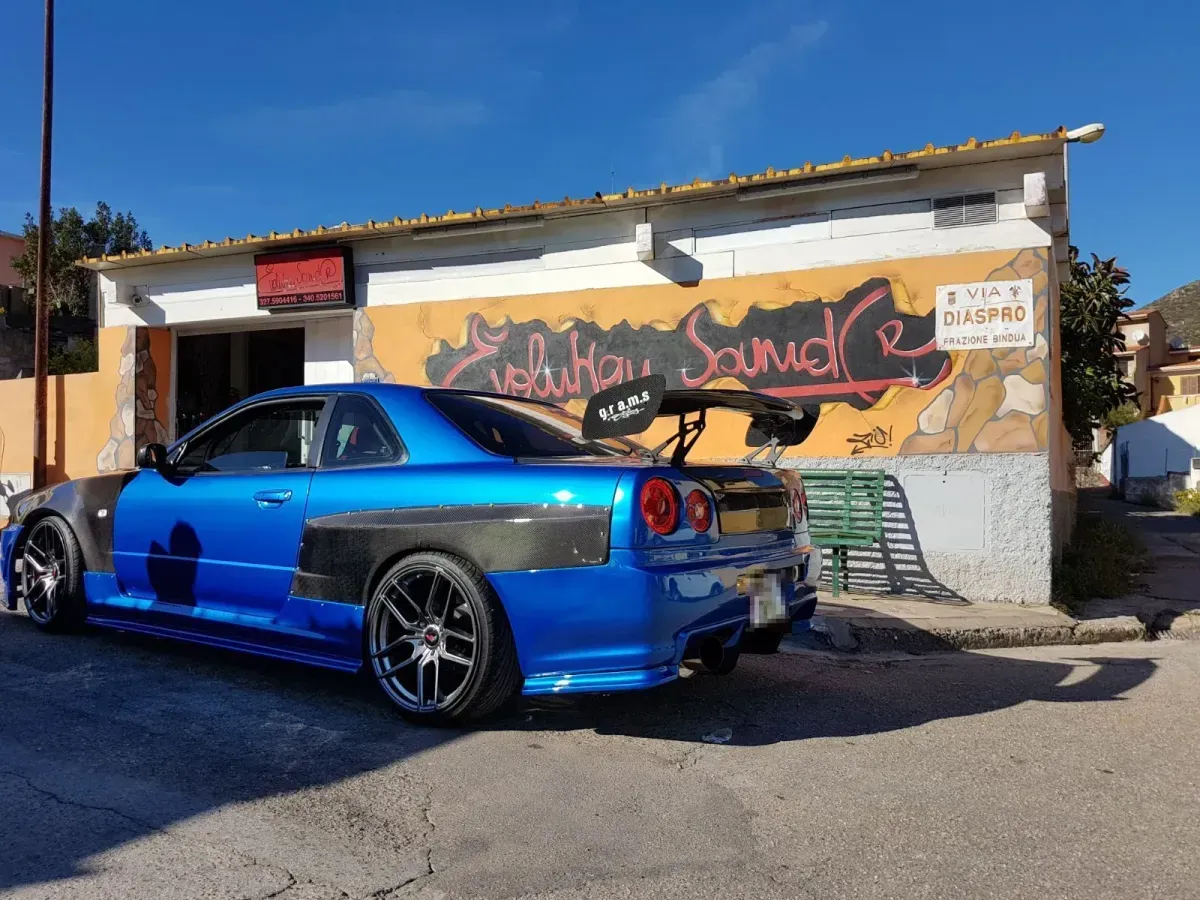
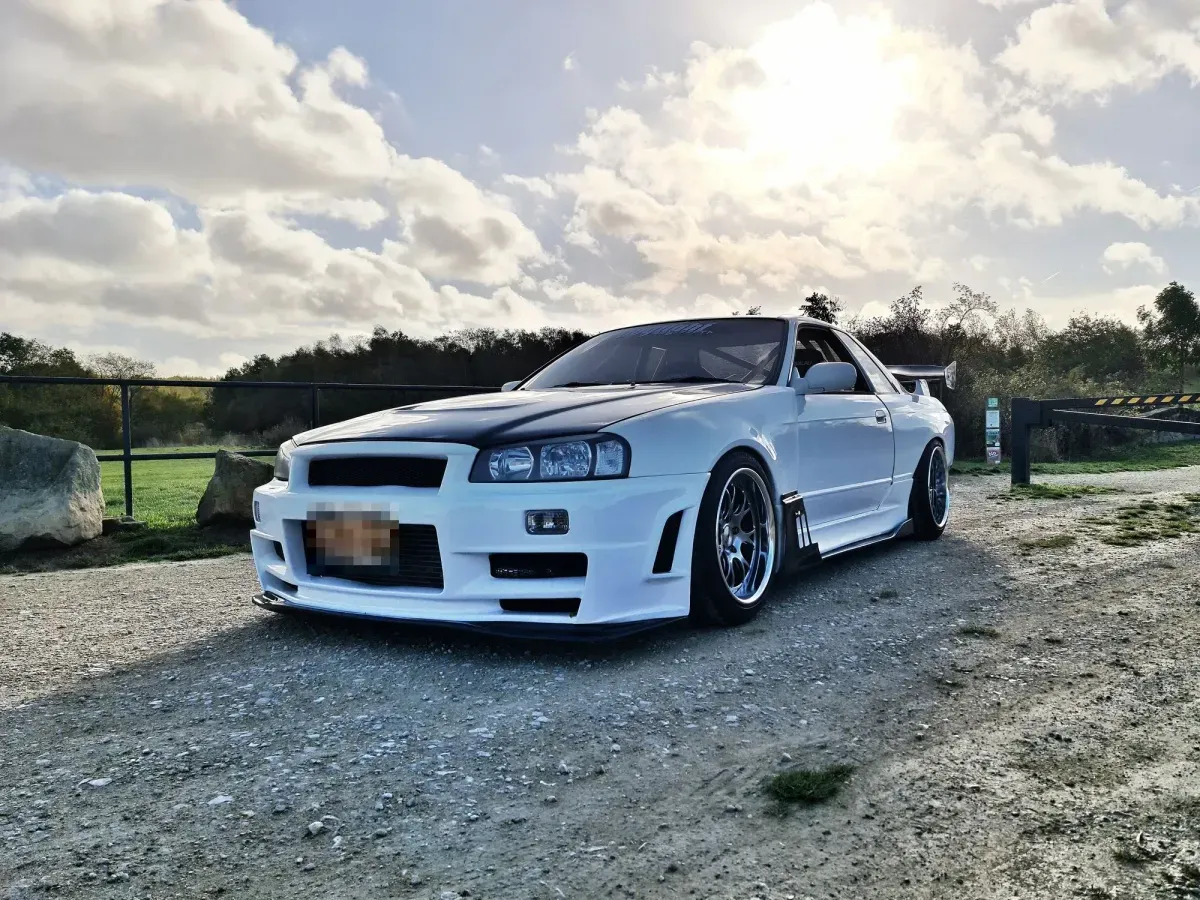
In real life the R34 GT-R was built from 1999 to 2002, and its body is not the same as the GT-T's: the GT-R has wider front wings. The blue R34 at the top of this page wears carbon front wings, carbon panels over the rear arches and a GT wing. Our R34 Z-Tune style front bumper is made for the GT-R and needs GT-R or Z-Tune style wide front wings. The style follows the Nismo Z-tune, a run of around 20 rebuilt R34 GT-Rs that Nismo made after R34 production had ended. Everything else we make for the car is in the R34 category.
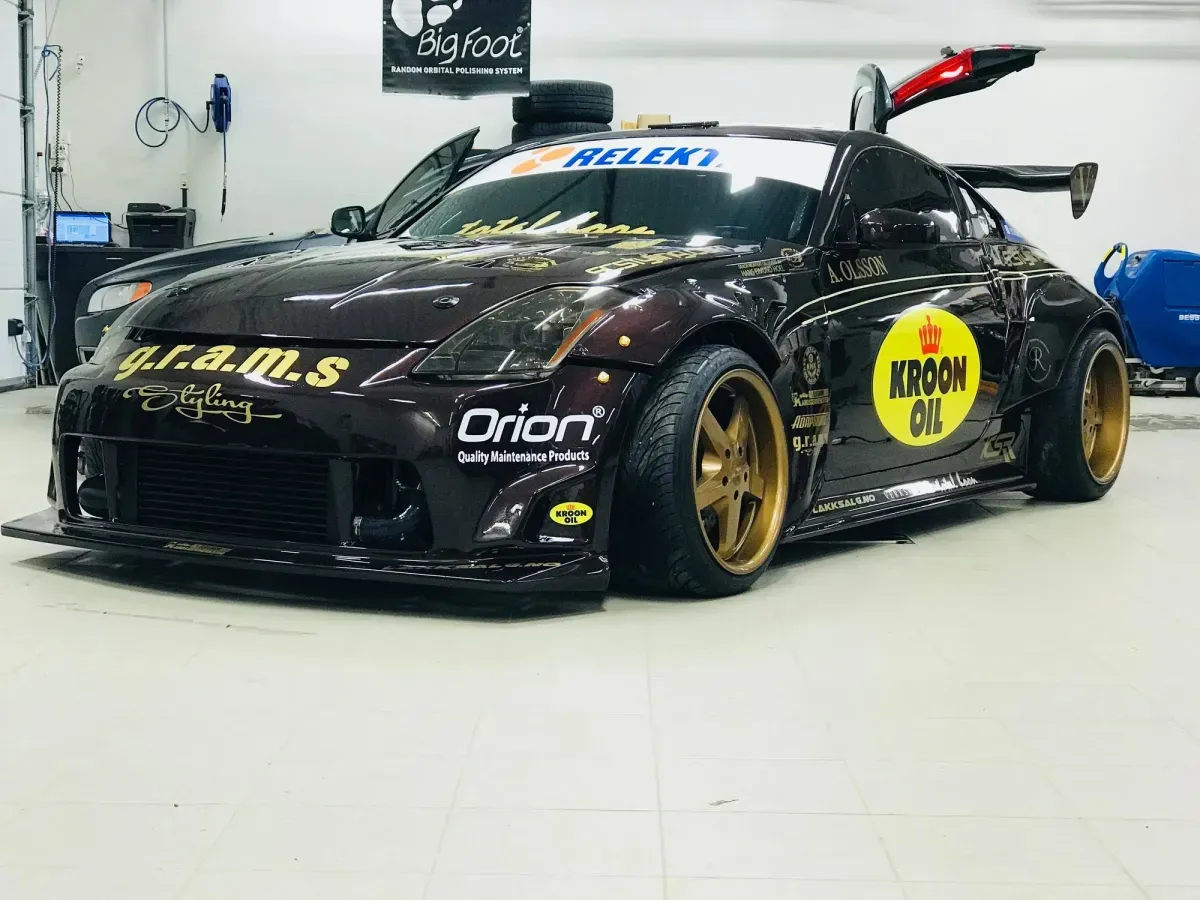
Nissan 350Z
The 350Z was a new car when the games came out. It went on sale in Japan in July 2002, and Underground lists it as a 2003 model. In the first game Melissa, Eddie's girlfriend, races a grey 350Z in the final race. In Underground 2 Rachel Teller, voiced by Brooke Burke, leaves you her 350Z at the Bayview airport, and her car is on the cover.
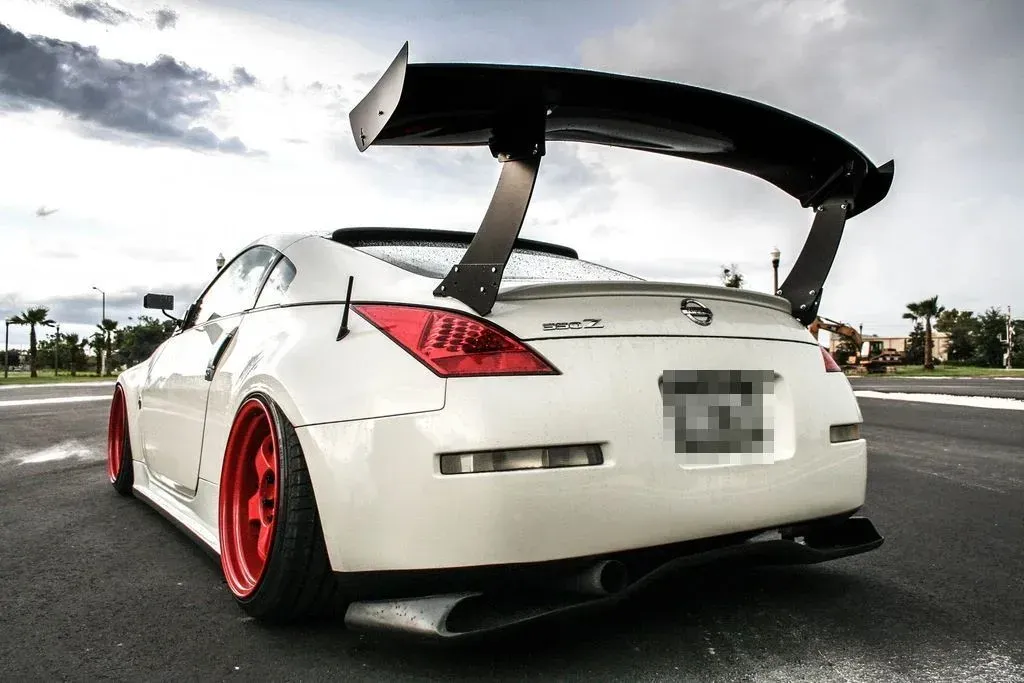
The white 350Z above has the look the game made famous: a big GT wing on boot mounts, red wheels and a low rear end. Our 350Z GT style wing comes with a 160 cm or 175 cm blade, and its boot mounts sit as far apart as the boot allows, so the blade wobbles less. For the sides, the Nismo V1 style side skirts match the Nismo look. Our 350Z aero guide explains pre-facelift and facelift fitment.
Toyota Supra MK4
Underground lists a 1998 Toyota Supra. That is the fourth generation, built from 1993 to 2002, and 1998 was the last year Toyota sold it in the United States. It is also the car we make the most parts for.
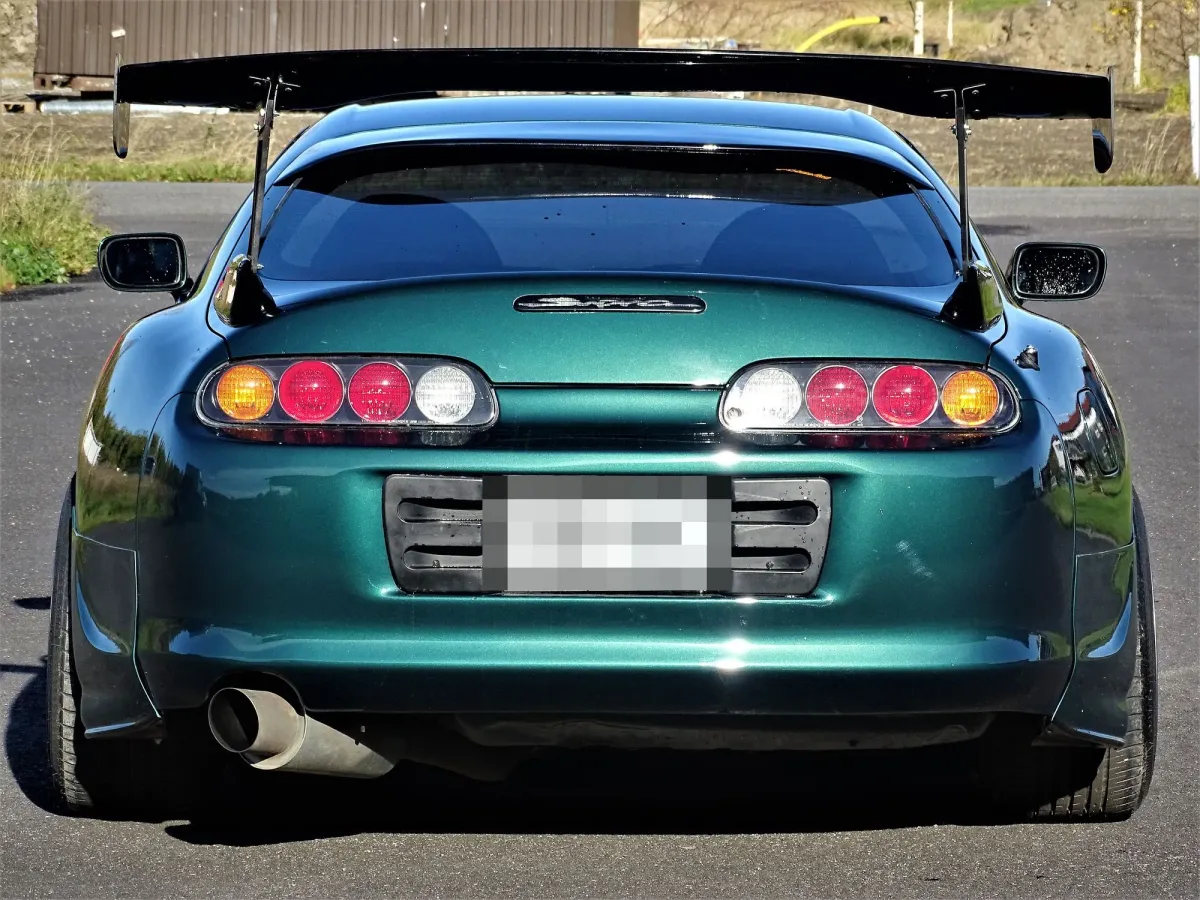
The green MK4 above runs a GT wing on tall uprights and rear spats on the corners of the bumper. For the full game look, our Ridox style body kit comes in two versions. The basic kit has a front bumper with undertray, side skirts and rear spats. The wide kit keeps the bumper and skirts, then adds wide front wings and rear arch flares. Our Supra MK4 body kit guide explains the Ridox, Bomex, Top Secret and TRD styles.
Nissan 240SX (S13)
Underground lists a 1992 Nissan 240SX SE, and the 240SX in Underground 2 is the S13 generation too. In the UK and Europe the S13 was sold as the 200SX, and only as the three-door fastback with pop-up headlights, the body Japan sold as the 180SX.
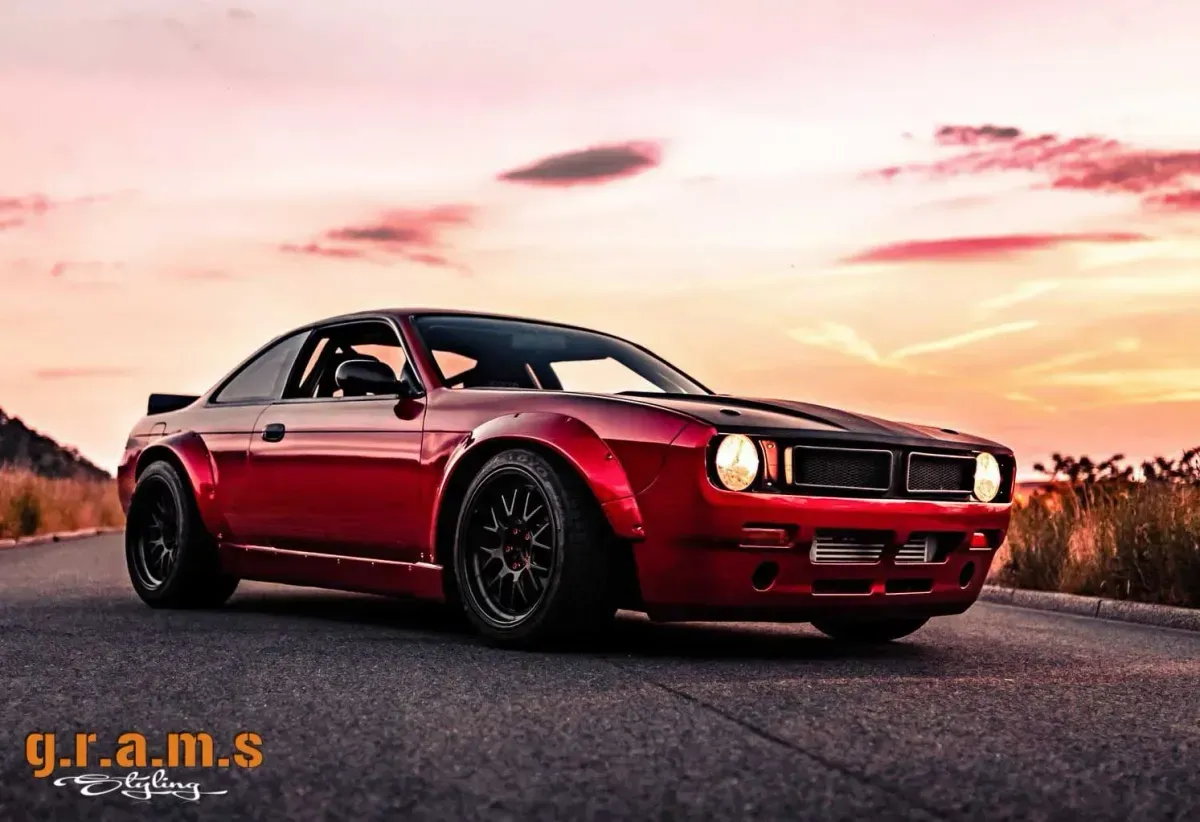
For a wide S13 hatch, our S13 hatch RB style V2 wide body kit fits the 180SX, 200SX and 240SX hatch. The base kit has a front bumper, side skirts, front flares 50 mm wider on each side and rear flares 80 mm wider on each side. The full kit adds canards and a front splitter. We are not affiliated with Nismo, Ridox or any other original maker, and our parts are not genuine parts from them.
Subaru Impreza
Underground lists a 2003 Impreza 2.5 RS, a second-generation GD saloon, and Underground 2 moved up to the WRX STi. Subaru built that generation from 2000 to 2007.
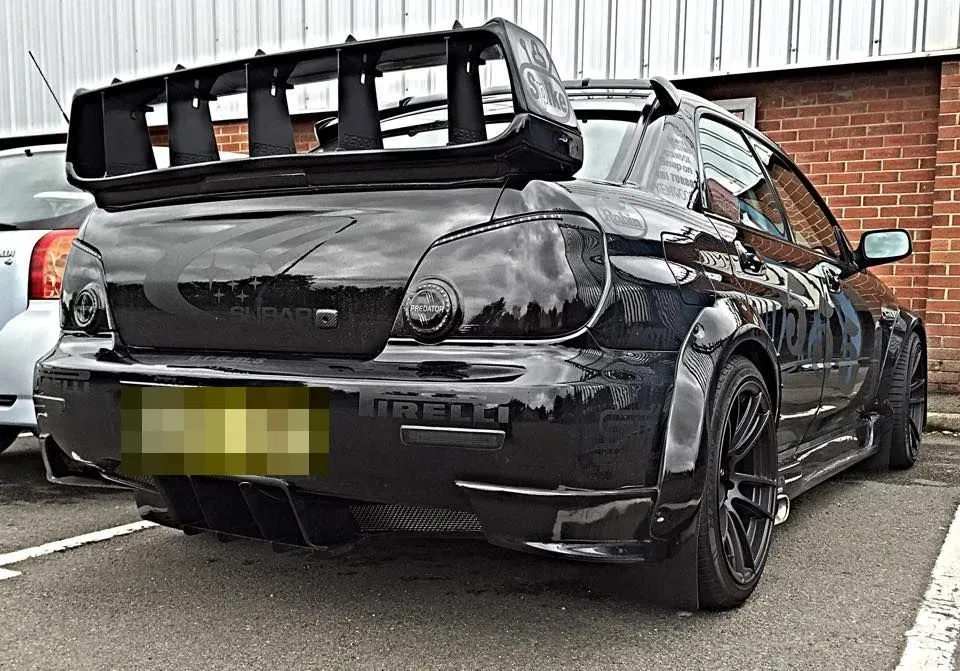
The black GD above shows the late Underground look on a rally car: bolt-on wide rear arches, side skirts, rear spats, a finned diffuser and a tall wing on several uprights. Lips, splitters, diffusers and spats for the Impreza are in our Impreza category.
Building a game car in real life
On a real car, three things decide whether a game-style build works:
- Parts must match each other. A wide bumper needs wide wings, as with the R34 bumper above.
- Wide arches are permanent. Bolt-on flares usually mean cutting the original arch. We strongly recommend that a professional garage fits a wide body kit.
- Paint is extra. We do not paint parts. Our parts come in black gelcoat, white gelcoat or carbon, so plan the paint shop into the build, or choose carbon and leave it bare.
For real builds, browse our customer cars for Nissan, Toyota and Subaru.
Still loved in 2026
Underground 2 still has an active fan scene. A hobby developer known as apfelbaum has been rebuilding it in Unreal Engine 5. A first demo came out in January 2025, and by October 2025 a video showed the whole career mode, with no AI opponents yet. It is a fan project, not an EA release.
FAQ
What cars are in Need for Speed Underground?
The 2003 game has 20 licensed cars, including the Nissan Skyline GT-R R34, Nissan 350Z, 1998 Toyota Supra, 1992 Nissan 240SX, Mazda RX-7, Honda S2000, Acura Integra Type R, Subaru Impreza 2.5 RS, Mitsubishi Eclipse and Volkswagen Golf GTI.
What car is on the cover of Need for Speed Underground 2?
Rachel Teller's Nissan 350Z. The first Underground has Eddie's Nissan Skyline GT-R R34 on its cover.
Is the 240SX in Need for Speed Underground an S13 or an S14?
It is the S13. The first game lists it as a 1992 Nissan 240SX SE, and Underground 2 also uses the S13. In the UK the S13 was sold as the 200SX hatchback.
When did Need for Speed Underground come out?
Underground came out on 17 November 2003 in North America and 21 November 2003 in Europe. Underground 2 followed on 15 November 2004 in North America and 19 November 2004 in Europe.
More from the blog
Nissan 350Z aero guide: Z33 body kit fitment, Nismo style and RB wide body
Nissan 350Z body kit and aero guide: coupe vs roadster, pre-facelift vs facelift bumpers, Nismo style and RB wide body parts, drift and track setups.
Nissan Skyline R32, R33 and R34 aero guide: GT-R vs GT-T body fitment
Skyline R32, R33 and R34 aero explained: GT-R vs GTS-t and GT-T bodies, coupe vs sedan, R33 series changes, Z-Tune style parts and fitting notes.
Nissan 200SX and Silvia S13, S14 aero guide: body kits and what fits
Nissan 200SX and Silvia S13, S14 aero guide: which body kits fit which car, Zenki vs Kouki fronts, Vertex and Boss V2 styles, drift or street.