Front splitter guide: does it work, how low, and how to fit support rods
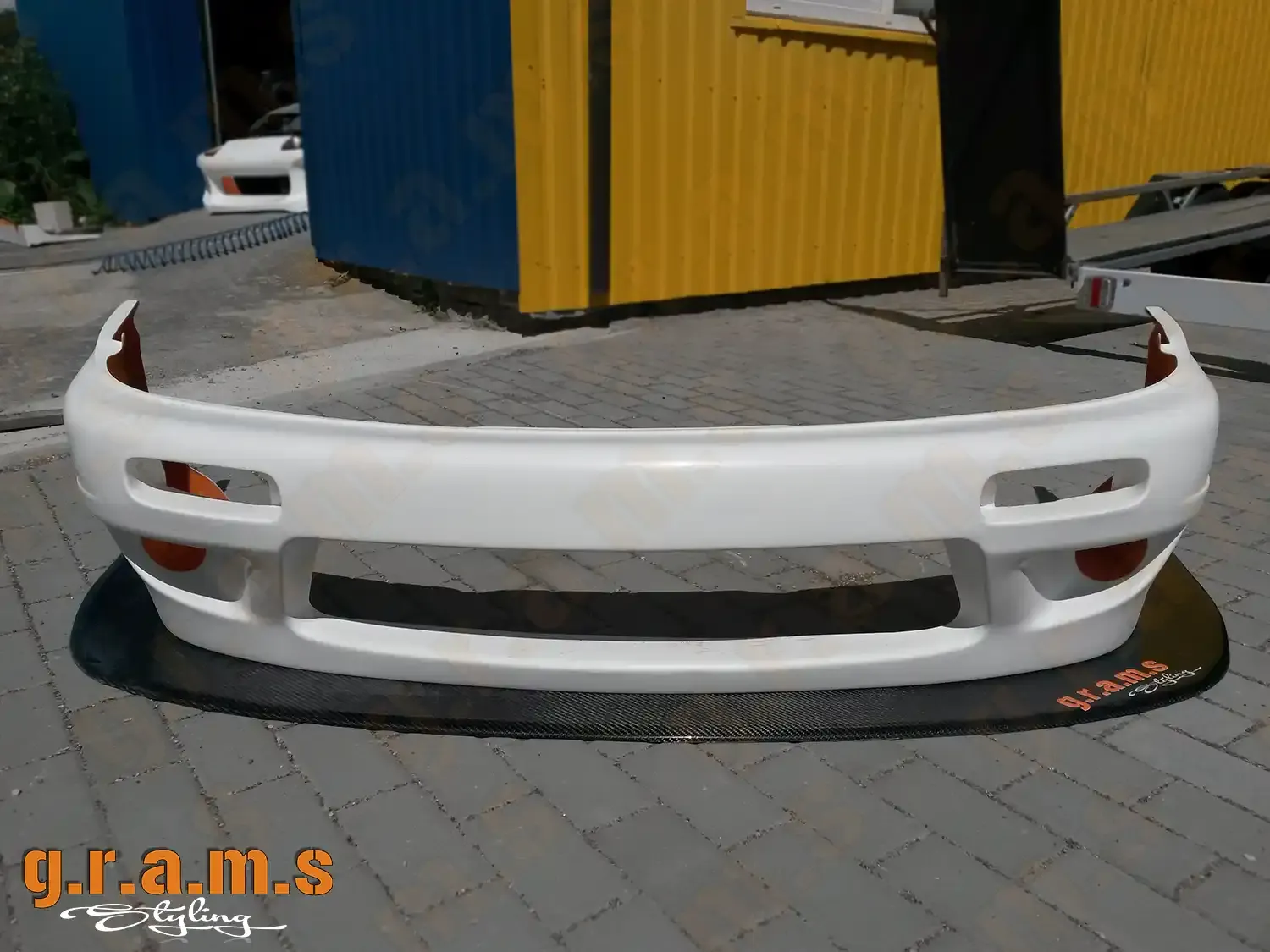
A front splitter is the most popular aero part we make, and the one we get the most questions about. Does it do anything on a road car? How low is too low? Do you need the support rods? This guide answers all of it, from the people who lay up the splitters in our UK and EU workshops.
Lip or splitter: what is the difference?
People use the two words for the same part, but they are not quite the same thing.
- A front lip follows the shape of the bumper and sits flush with its lower edge. It is mostly styling: it makes the car look lower and finishes the bumper line.
- A front splitter is a flat plane that sticks out forward of the bumper, usually by a few centimetres. That forward shelf is what makes it aerodynamic.
Many parts sit in between. Our universal front bumper splitters are flat blades you trim and mount under almost any bumper. Car-specific parts like the Supra MK4 Ridox style splitter follow one bumper exactly.
Does a front splitter actually work?
Yes, but less than the internet suggests at road speeds, and in a specific way.
Air hitting the front of the car slows down and builds up pressure on top of the splitter. Air going underneath speeds up and its pressure drops. High pressure above and low pressure below push the nose down. That is downforce at the front axle.
Two things limit what you get on the road:
- Downforce grows with the square of speed. At 70 mph you get about four times the load you get at 35 mph. On a motorway it is real but small. On a track at 100 mph and over it starts to matter.
- Front-only aero shifts the balance. More grip at the front and nothing new at the rear can make a car more willing to oversteer at speed. On a track car, a splitter usually goes with a rear wing or diffuser to keep the balance.
On a daily driver, be honest with yourself: a splitter is mostly about the look, with a small benefit at speed. On a track or time attack car it is a real tuning tool.
How low can you run a splitter?
There is no single number, because what scrapes is not just height. It is the approach angle: the angle between the front edge of the splitter and the bottom of your front tyre. A splitter that sticks far forward hits a speed bump or a steep driveway long before one that is tucked in, even at the same height.
Before you fit anything:
- Measure your current front ground clearance at the lowest point of the bumper.
- Measure how far forward the splitter will stick out past the bumper.
- Check the worst ramp you drive over every day: your own driveway, a car park ramp, the speed bumps on your street.
If your car is already low, choose a shorter overhang rather than giving up on a splitter. Remember that the splitter also lowers the front of the car visually, so you do not need much.
Why support rods matter
A splitter is a long, flat lever bolted to the bottom of a bumper. Without support it flexes. At speed the air pushes the front edge down, and over a bump the ground pushes it up. Flex cracks fibreglass, tears mounting holes out of the bumper and lets the splitter flutter.
Support rods hold the front edge of the splitter at a fixed height from a solid point on the car, usually the crash bar or a chassis rail behind the bumper. They do not add ground clearance. They stop the splitter moving.
Our universal splitter and diffuser support rods come in two adjustable lengths, 155 to 245 mm and 260 to 440 mm. Most universal splitters can be ordered with one or two pairs directly on the product page.
Where to put them:
- Keep the rods as close to vertical as you can. An angled rod pushes the splitter sideways as well as up.
- Place them a little in from the centre on each side, where the splitter has the most unsupported span. A common guide is roughly 13 to 18 cm either side of the centre line, adjusted to what is solid behind your bumper.
- Fix the top end to metal, never to the plastic bumper skin.
How to fit a universal front splitter
This is the order we recommend. If you are not confident with a drill and a jigsaw, a body shop will do it in a few hours.
- Test fit first. Offer the splitter up under the bumper with the car on level ground. Check the gap along the full width and how far it sticks out.
- Mark and trim. Universal splitters are made oversize so they can follow your bumper. Mark the outline from underneath, then trim with a fine-tooth blade. Wear a mask: fibreglass and carbon dust are not something to breathe.
- Drill the mounting holes through the splitter and into the underside of the bumper or the undertray mounts. Use large washers or rivnuts so the load spreads.
- Fit the support rods to solid metal behind the bumper and set the splitter level.
- Seal the cut edges. A thin coat of resin or clear lacquer stops water getting into the cut edge of the laminate.
- Check after the first drive. Re-tighten everything after a week of driving.
Do not drill anything until the test fit is right. Our returns cover unfitted parts in their original packaging, and a drilled part is a fitted part. If something looks wrong, send us a photo first.
Fibreglass, carbon or ABS?
Splitters come in three common materials:
- ABS plastic splitters are thermoformed sheets. They flex a lot, which helps over bumps, but they are not stiff enough for real aero load and can sag in the heat.
- Fibreglass is stiff, cheap to repair and the usual choice for a street or drift car that will meet a kerb sooner or later. It comes in black or white gelcoat, ready to run or paint.
- Carbon fibre is the lightest and stiffest. It is the right choice for a track car, or if you want the weave on show.
We explain the difference in detail in fibreglass vs carbon fibre body kits.
Will a splitter affect my MOT or insurance?
A splitter is legal in the UK, but it has to be secure and must not be likely to cause injury. You should also tell your insurer. We cover the exact MOT wording and what insurers ask in are body kits legal in the UK?
FAQ
Do front splitters do anything on a normal road car?
They add a small amount of front downforce that grows with the square of speed, so the effect is small at legal road speeds and real on a track. On a daily driver the main benefit is the look.
Do I need splitter support rods?
On any splitter that sticks out past the bumper, yes. The rods stop it flexing under air load and over bumps, which protects both the splitter and your bumper. A flush lip that does not overhang does not need them.
How do I fit support rods without removing the bumper?
On many cars you can reach the crash bar through the grille opening or from underneath. Fix the top end to the crash bar or a chassis rail and the bottom end to the splitter. If there is no solid point within reach, the bumper has to come off.
Will a front splitter scrape on speed bumps?
It can. What matters is the approach angle from the front edge of the splitter to the front tyre, not only the height. A splitter with a short overhang scrapes far less than a long one at the same height.
What is the difference between a front lip and a splitter?
A lip follows the bumper and sits flush with it, mostly for styling. A splitter is a flat plane that sticks out forward of the bumper and creates downforce.
More from the blog
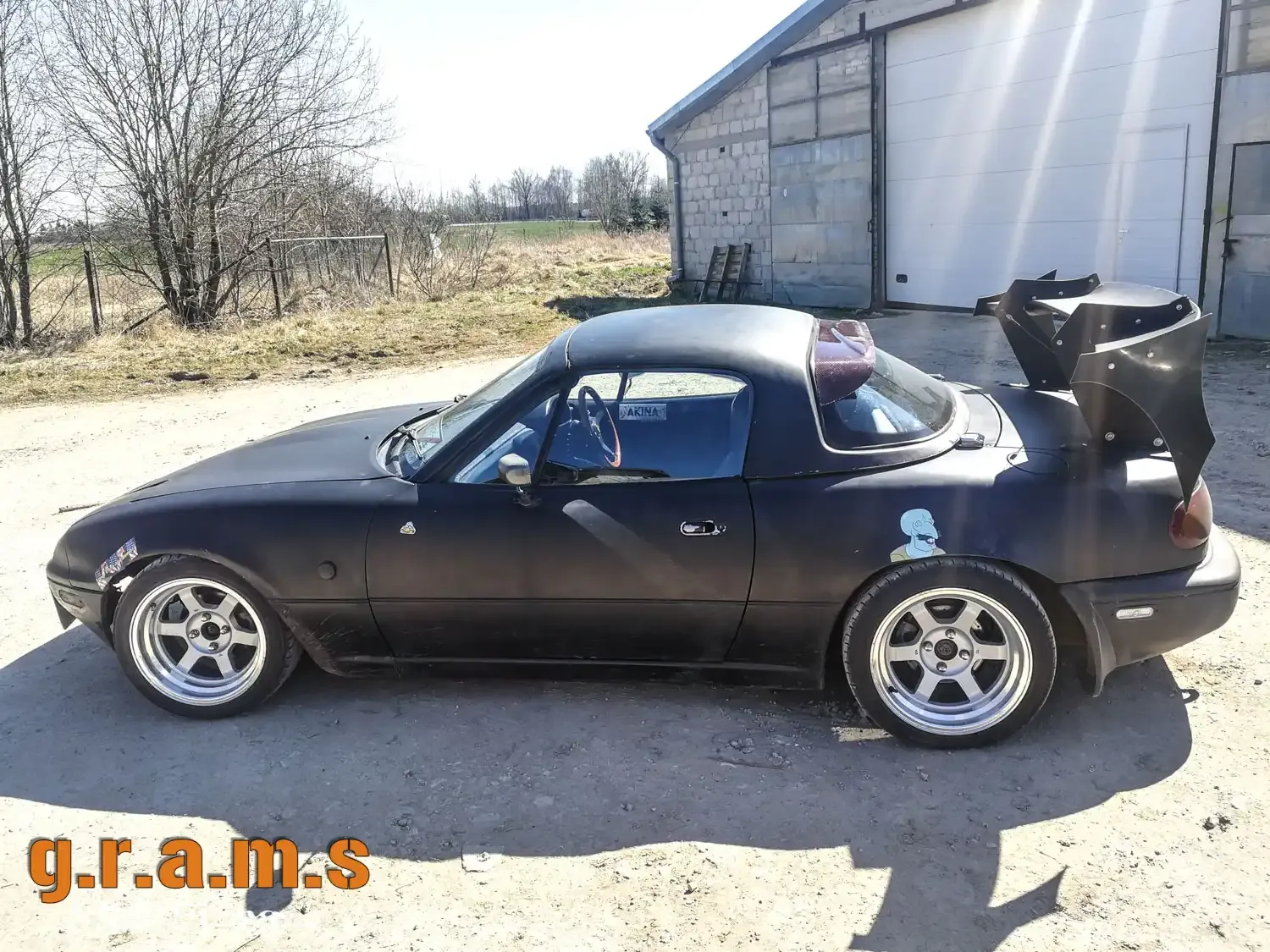
Mazda MX-5 NA and NB aero guide: hardtop spoiler, Bomex side skirts and wide arches
How to fit a hardtop roof spoiler on an MX-5 without the seal problem, what Bomex style side skirts change, wide arches for NA and NB, and which parts suit a road car, a track car or a show build.

New Toyota Celica: what we know, and why the old Celicas still matter
What we know about the new Toyota Celica: what Toyota has said, Autocar's hybrid 4WD report, the 2027 WRC prototype and aero for older Celicas.

Nissan 200SX and Silvia S13, S14 aero guide: body kits and what fits
Nissan 200SX and Silvia S13, S14 aero guide: which body kits fit which car, Zenki vs Kouki fronts, Vertex and Boss V2 styles, drift or street.