Initial D cars explained: the AE86, FD RX-7 and the touge battles
The cars of Initial D are real Japanese road cars from the 1980s and 1990s: Takumi Fujiwara's Toyota AE86 Sprinter Trueno, the Takahashi brothers' Mazda RX-7s (Ryosuke's white FC3S and Keisuke's yellow FD3S), the Lancer Evolution III and IV of the Emperor team, and Bunta's GC8 Subaru Impreza. Below is what each car is, the battles that made it famous, and what to know if the series has sent you looking at one.
What Initial D is
Initial D is a manga by Shuichi Shigeno, serialised in Kodansha's Young Magazine from July 1995 to July 2013 and collected in 48 volumes. The anime ran in stages from 1998 (First Stage) to 2014 (Final Stage), with films in between, and is remembered as much for its eurobeat soundtrack as for its driving. The story is set in Gunma prefecture, on mountain passes (touge) where local teams race downhill and uphill at night. Keiichi Tsuchiya, the Drift King, helped with the editorial supervision, which is one reason the driving still holds up for people who know cars.
Takumi's AE86 Sprinter Trueno
Takumi's car is a 1983 Sprinter Trueno GT-APEX three-door in two-tone white and black, the "panda" colours, with "Fujiwara Tofu Store" lettered on the doors. It belongs to his father Bunta, who has had him delivering tofu up and down Mount Akina before dawn since his early teens, with a cup of water in the holder that must not spill. Takumi thinks it is a chore. In fact it has made him one of the smoothest drivers on the mountain.
The real AE86 was built from May 1983 to July 1987. It was the last rear-wheel-drive Corolla, with the 1.6 litre twin-cam 4A-GE, rated at 130 PS in Japanese trim, in a light body. Toyota sold it two ways: the Sprinter Trueno with pop-up headlights, and the Corolla Levin with fixed headlights. Each came as a two-door coupé or a three-door hatchback.
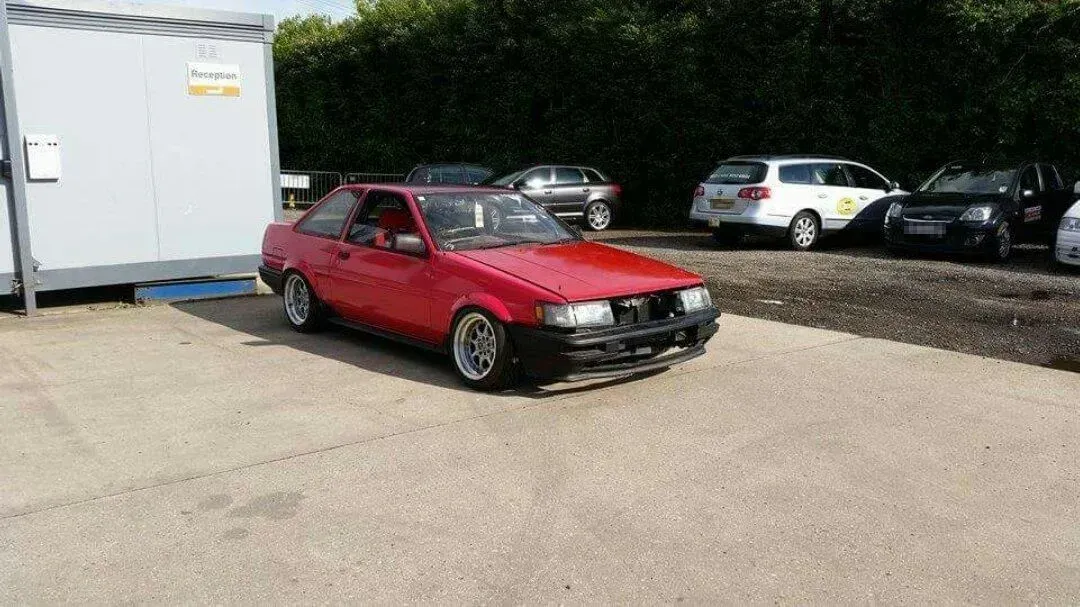
The red customer car at the top of this page is a Levin coupé, so it has the fixed headlights, not Takumi's pop-ups. It is the same AE86 underneath. The series made the AE86 so wanted that resale prices climbed, a premium people call the "Takumi tax" or "tofu tax".
The battles that made the Eight-Six
- Keisuke's FD on Akina: Takumi first passes Keisuke at dawn on a delivery run, then beats him in the official downhill, using the "gutter run" to hook his inside wheels in the drainage channel through the hairpins.
- Kyoichi Sudo's Evo III: his first defeat. The old engine blows in the episode titled "Goodbye Eight-Six".
- The new engine: Bunta fits a racing-spec 4A-GE, and Takumi later beats Kyoichi on the Irohazaka in Nikko.
- The last race: against Shinji Inui, the engine blows again and Takumi still crosses the line first. He then retires the car to restore it slowly.
Trueno, Levin or AE85: telling them apart
Itsuki, Takumi's friend at the petrol station, proudly buys an "Eight-Six" Levin that turns out to be an AE85. The AE85 looks the same but has the 1.5 litre single-cam 3A-U, and it is a useful lesson for buyers today. Check the chassis code and the engine, not the badges.
The split matters for parts too. Our lightweight front wings fit the AE85 and AE86 Levin coupé, add 30 mm on each side, and do not fit the Trueno, because its front end is different. The lightweight boot lid is for the two-door coupé, not the hatchback. The rest of what we make for these cars is in the AE86 range.
The other common route is bolt-on arches over wider wheels. On a car without a kit made for it, universal 50 mm fender flares do that job. Whatever you fit, check whether your car is the notchback coupé with a boot or the three-door hatch like Takumi's, because many body parts differ between the two.
The Takahashi brothers' RX-7s: FC3S and FD3S
Ryosuke Takahashi leads the Akagi RedSuns in a white FC3S Savanna RX-7, the second-generation car built from 1985 to 1991 with the 13B-T rotary turbo. His younger brother Keisuke drives a yellow FD3S, the third generation, built from October 1991 to August 2002. The FD uses the 13B-REW with sequential twin turbos, rated at 255 PS in 1992 and 280 PS by the end of production.
Keisuke's loss on Akina starts the whole story, and the First Stage ends with Takumi against Ryosuke's FC in a downhill battle. Later the brothers form Project D, with Takumi on the downhill and Keisuke on the uphill. For FD owners, our Top Secret Shine style RX-7 diffuser is pictured on an FD in its listing. We will cover both RX-7s properly in a later model guide.
The four-wheel-drive rivals: Evo III, Evo IV and the GC8 Impreza
The Emperor team runs only Lancer Evolutions. Kyoichi Sudo's Evo III (CE9A, February 1995 to August 1996) is the car that beats Takumi and kills his first engine. Seiji Iwaki drives an Evo IV (CN9A, August 1996 to January 1998), which moved to the new Lancer platform with the engine turned round. If you own an Evo IV, our OEM style front bumper uses the original brackets and factory mounting points.
Bunta's later car is a Subaru Impreza WRX STi Type R Version V: the two-door GC8 coupé, Sonic Blue in the anime and gunmetal grey in the manga. He beats Takumi with it and pushes him to learn four-wheel drive, and at the very end Takumi goes back to tofu runs in the Subaru.
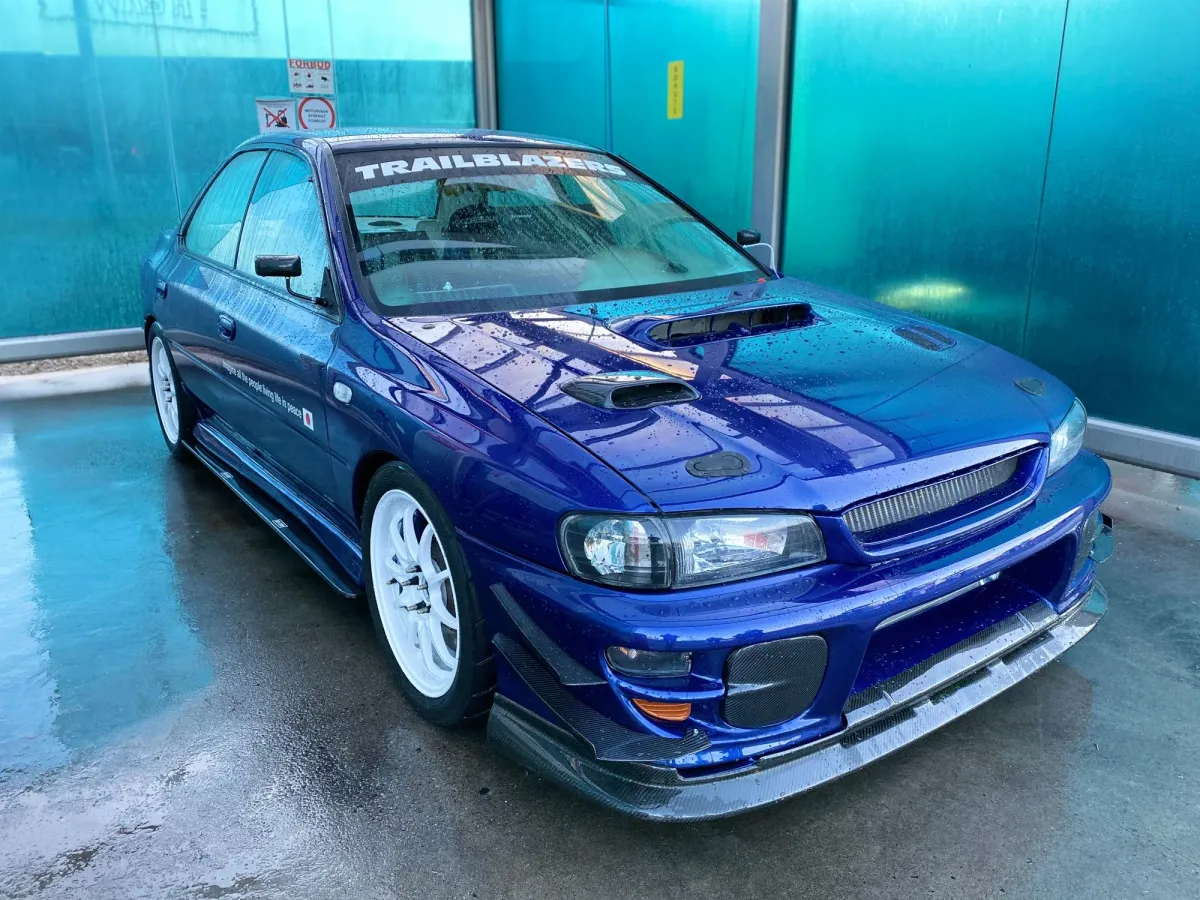
The blue Impreza above is a customer's first-generation four-door saloon, which shares its front-end styling with Bunta's two-door coupé. If you have the two-door, the GC8 coupé WRC style front bumper gives the rally look of the period. We are not affiliated with Top Secret, Shine, Subaru or any other original maker, and our parts are not genuine parts from them.
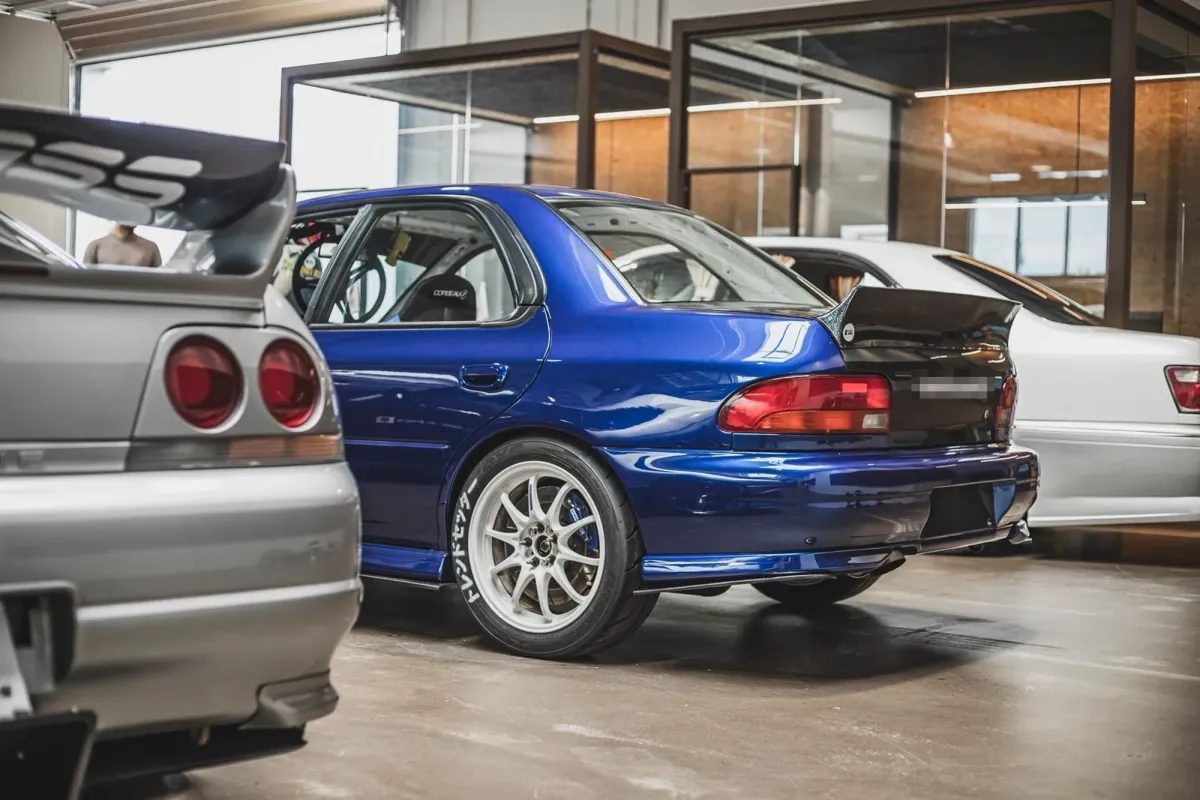
From the back, the same generation of Impreza on another customer's saloon: a black boot spoiler, side skirts and white ten-spoke wheels, parked indoors next to a silver Skyline.
The other cars on the mountain
- Takeshi Nakazato: Nissan Skyline GT-R R32, leader of the Myogi NightKids.
- Shingo Shoji: Honda Civic EG6, also of the NightKids.
- Mako Sato: a Sil-Eighty, the S13 Silvia front on a 180SX body, on the Usui pass.
- Koichiro Iketani: Nissan Silvia S13, leader of the Akina SpeedStars.
For the S13 and the Sil-Eighty, see our 200SX S13 and S14 aero guide.
Touge in real life
Mount Akina is a made-up name for Mount Haruna in Gunma, and the downhill follows Prefectural Route 33 from the Ikaho side towards Lake Haruna, with its run of five hairpins. You can drive it, but it is a public road with locals, tour buses and cyclists, and the speed limits are low. The races in Initial D are illegal street racing, there and here. In the UK, track days, sprints and hill climbs are the legal way to drive like that.
If the series is why you are looking at an AE86, start with the car and its chassis code, then plan the parts. You can see what other owners have done in our Toyota customer cars gallery.
FAQ
What car does Takumi drive in Initial D?
A 1983 Toyota Sprinter Trueno GT-APEX (AE86) three-door in white and black, owned by his father Bunta. Later in the story he also drives Bunta's Subaru Impreza WRX STi Type R (GC8).
What is the difference between the AE86 Trueno and Levin?
The Sprinter Trueno has pop-up headlights and the Corolla Levin has fixed headlights. Both were sold as a two-door coupé or a three-door hatchback, with the same rear-wheel-drive chassis and 4A-GE engine.
Which RX-7s are in Initial D?
Ryosuke Takahashi drives a white FC3S, the second-generation RX-7, and his brother Keisuke drives a yellow FD3S, the third generation.
Is Mount Akina a real place?
Akina is a made-up name for Mount Haruna in Gunma, Japan. The downhill follows Prefectural Route 33, a public road with low speed limits.
More from the blog
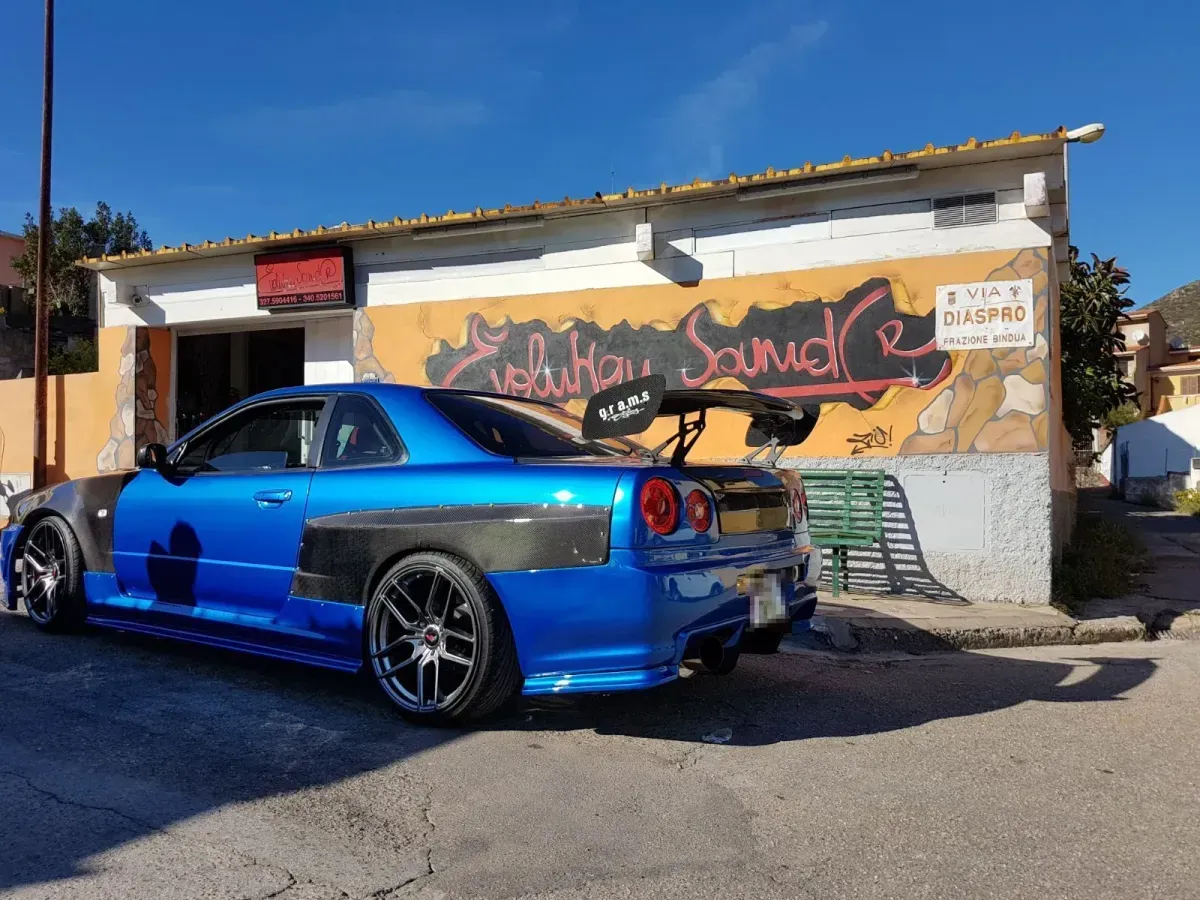
Need for Speed Underground cars: the body kits that defined 2000s tuning
The Need for Speed Underground cars that defined 2000s tuning: the R34, 350Z, Supra, 240SX and Impreza, what the games let you fit and the real parts.
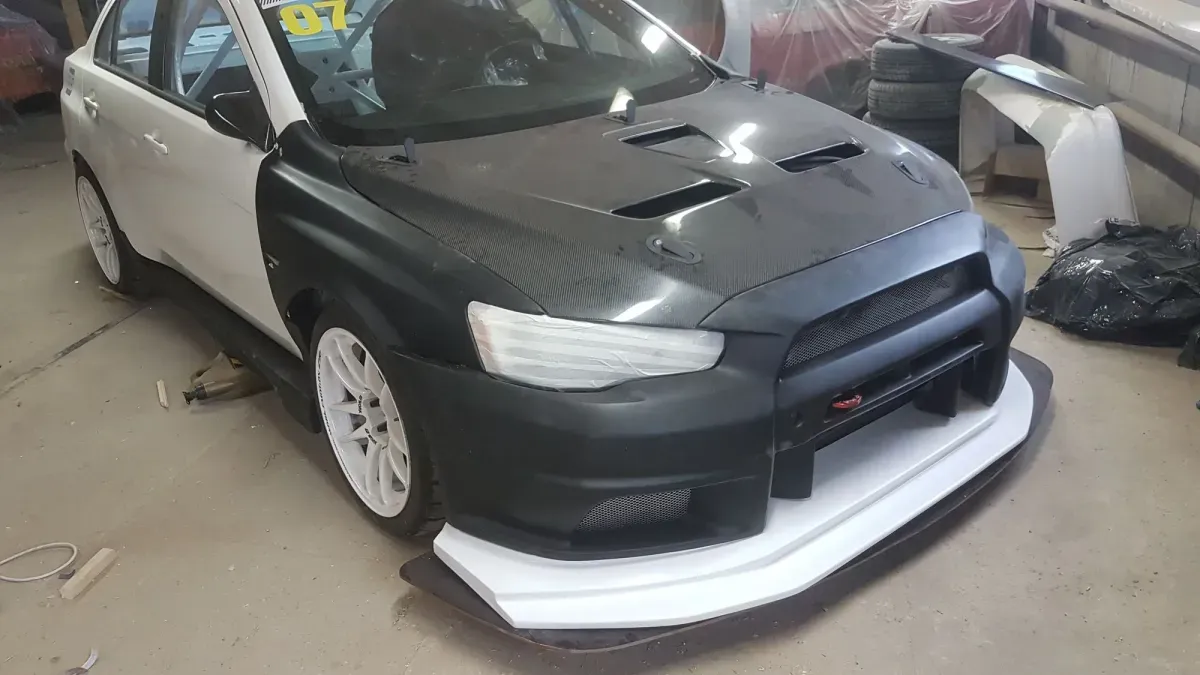
How to fit a body kit: test fit, panel gaps, bolting vs bonding
How to fit a body kit in fibreglass or carbon: inspect on delivery, test fit before paint, set panel gaps, drill gelcoat, choose rivnuts or adhesive.
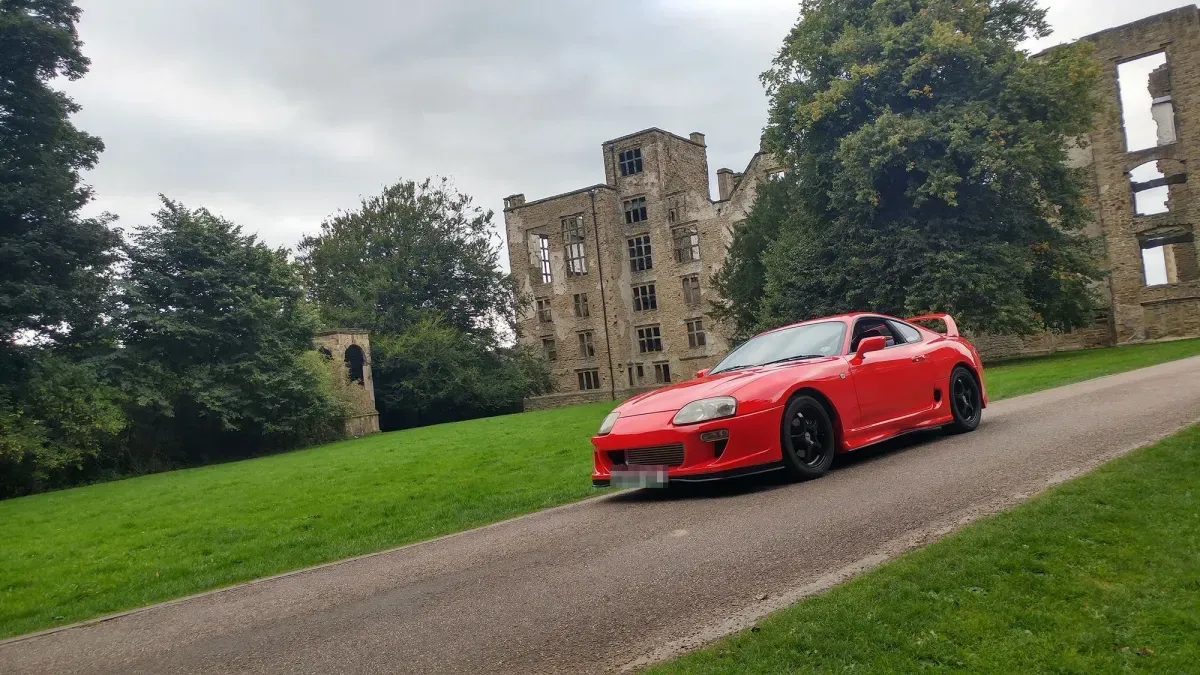
Fast and Furious cars: the real Supra, Skyline and RX-7 behind the films
Fast and Furious cars explained: the orange Supra MK4, the R34 Skylines and Han's VeilSide RX-7, what was fitted and what they sold for.